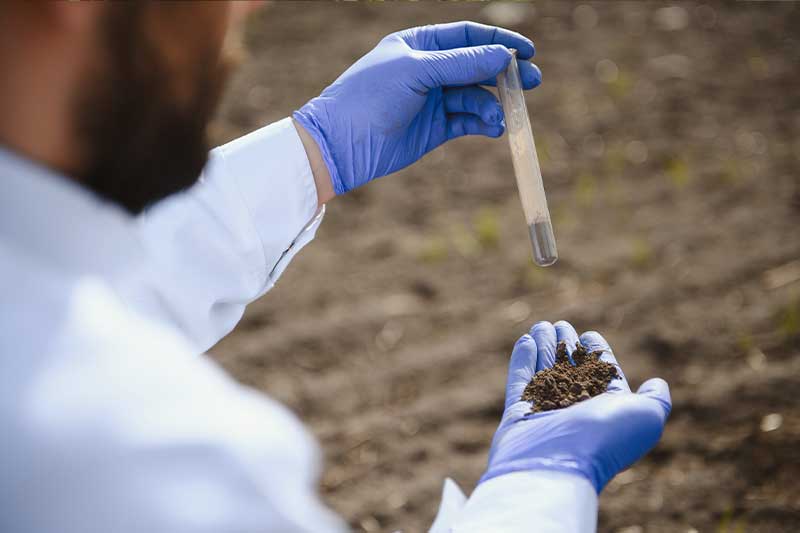
Every durable structure starts with a clear picture of the ground below it. Soil Testing gives engineers, contractors, developers, and property owners reliable data about soil strength, composition, moisture behavior, density, and load-bearing ability. These details help project teams choose suitable foundation systems, prepare sites correctly, and reduce costly structural concerns.
Soil can appear firm at surface level yet contain weak layers, loose material, high moisture, or clay that changes volume after wet and dry cycles. Visual checks alone cannot reveal these conditions. Professional Soil Testing provides measurable results that support sound engineering decisions before major construction work begins.
Inch-On Materials Laboratory provides Soil Testing services guided by recognized ASTM methods, calibrated equipment, careful sample handling, and clear technical reports. Each result helps project teams assess site conditions with greater confidence and plan work based on actual soil properties.
What Is Soil Testing?
Soil Testing refers to field and laboratory procedures used to measure physical and mechanical properties of soil. These procedures may examine particle size, plasticity, moisture condition, density, resistance, strength, and classification.
Soil samples can differ greatly across one project site. One area may contain dense sand, while another area may contain soft clay or loose fill. Soil Testing helps identify these differences before foundation design, excavation, compaction, or pavement work moves forward.
Results support many project decisions. Engineers may use Soil Testing data to estimate allowable bearing pressure, assess settlement potential, select foundation depth, choose compaction targets, or recommend ground treatment. Contractors may also use reports to plan excavation, drainage, material replacement, and site preparation.
Why Soil Testing Matters Before Construction
Soil serves as the support system for every footing, slab, road, retaining wall, and structural element that transfers load to the ground. Poor soil conditions can cause movement, cracking, tilting, rutting, or uneven settlement. Soil Testing helps reduce these risks by giving project teams early access to site-specific data.
Early Soil Testing may also help control costs. Unexpected weak soil discovered after excavation begins can lead to redesign, added material, deeper footings, work delays, or extra equipment needs. Testing before major work allows engineers and contractors to plan proper solutions with fewer surprises.
Soil Testing also supports quality-control records. Reports provide documented evidence of test methods, measured values, soil classification, and sample details. Such records may support project reviews, regulatory requirements, client approvals, and coordination among technical teams.
Soil Testing and Structural Stability
Structural stability depends partly on how soil reacts to pressure. Soil must support applied loads without excessive movement or failure. Soil Testing helps determine whether ground conditions can carry expected loads from homes, buildings, warehouses, roads, bridges, and other structures.
Weak soil may compress too much under weight. Loose material may shift. Expansive clay may swell after absorbing water and shrink during dry periods. Poorly graded soil may drain badly or compact unevenly. Soil Testing helps detect these characteristics so design professionals can select appropriate foundation or ground-improvement measures.
Accurate data also helps protect long-term performance. A structure may look sound after completion yet develop cracks or uneven floors months or years later because of settlement. Proper Soil Testing gives engineers a stronger basis for reducing that possibility.
Soil Testing for Bearing Capacity
Bearing capacity describes how much load soil can support before unacceptable settlement or shear failure occurs. This value has a major effect on footing size, foundation type, structural layout, and allowable loads.
Soil Testing helps engineers assess soil resistance and density across different depths. Where stronger soil lies deeper below the surface, project plans may require deeper foundations, piles, or other support systems. Where suitable soil exists closer to grade, shallow footings may be practical.
Without Soil Testing, foundation design may rely on assumptions that do not match actual site conditions. That approach can create safety concerns or unnecessary costs. Reliable test data helps design teams balance safety, constructability, and budget.
Soil Testing for Settlement Risk
Settlement happens when soil compresses under structural load. Some settlement may be expected, but excessive or uneven movement can damage walls, floors, doors, windows, pipes, columns, and finishes.
Soil Testing helps identify soil types that may compress, collapse, swell, shrink, or lose strength after moisture changes. Engineers can review test results together with structural loads and site conditions to estimate settlement behavior.
Uneven settlement deserves special attention because one part of a structure may move more than another. This difference can create cracks, misalignment, and serviceability concerns. Soil Testing supports better assessment of such risks before construction begins.
Soil Properties Evaluated Through Soil Testing
Different Soil Testing methods focus on different soil properties. Each property adds useful information for design, construction, and quality control.
Particle size distribution shows the proportions of gravel, sand, silt, and clay. This affects drainage, compaction, strength, and classification.
Plasticity measures how fine-grained soil changes as moisture content varies. Highly plastic soil may expand, shrink, or deform more than low-plasticity material.
Moisture content affects density, compaction, workability, and strength. Too much or too little water may prevent soil from reaching required compaction.
Density reflects how tightly soil particles are packed. Dense soil often provides better support than loose soil, though performance still depends on soil type and site conditions.
Resistance data from field procedures can help estimate relative density, consistency, and strength at various depths.
Soil classification groups material based on measurable properties. This gives engineers a common language for describing likely behavior.
ASTM D1586 Standard Penetration Test
ASTM D1586 covers the Standard Penetration Test, commonly called SPT. This field procedure measures soil resistance while a split-barrel sampler is driven into the ground using a standard hammer system.
The number of blows required for penetration gives useful data about soil density or consistency. SPT results may help engineers assess subsurface layers, estimate strength, review foundation depth, and study settlement potential.
Soil Testing through ASTM D1586 also allows collection of disturbed samples for visual review and laboratory classification. Results should be interpreted by qualified professionals together with boring logs, groundwater conditions, structural loads, and other project data.
ASTM D4318 Atterberg Limits
ASTM D4318 covers liquid limit, plastic limit, and plasticity index tests for fine-grained soil. These values describe how soil behaves across different moisture conditions.
Liquid limit marks the moisture level where soil changes from a plastic state to a more fluid state. Plastic limit marks the moisture level where soil changes from a semi-solid state to a plastic state. Plasticity index equals the difference between liquid limit and plastic limit.
A higher plasticity index often suggests greater sensitivity to moisture and a stronger tendency toward shrinkage or swelling. Soil Testing under ASTM D4318 supports classification of clay and silt while helping engineers assess workability, stability, and volume-change potential.
ASTM D422 Particle Size Analysis
ASTM D422 has long served as a recognized method for particle size analysis of soil. The procedure separates and measures particle groups so laboratories can determine percentages of gravel, sand, silt, and clay.
Coarser particles may be measured through sieve analysis, while finer particles may require sedimentation-based procedures. The resulting gradation curve shows how particle sizes are distributed across the sample.
Particle size affects drainage, compaction, erosion resistance, and load support. Well-graded soil contains a broad range of particle sizes that may pack together efficiently. Uniform soil contains particles of similar size and may behave differently under load or water flow. Soil Testing through particle size analysis helps teams understand these traits.
How the Soil Testing Process Works
A reliable Soil Testing process begins with clear project information. The laboratory reviews the requested test method, sample identification, source, depth, quantity, and project specifications.
Sample preparation follows applicable procedures. Soil may need drying, breaking apart, splitting, sieving, mixing, or moisture conditioning depending on the test. Careful preparation helps preserve accuracy and repeatability.
Laboratory personnel then perform the required measurements using calibrated equipment. Recorded data receives review before calculations and classifications are completed.
The final report presents sample details, test methods, measured values, calculations, and relevant observations. Clear reporting allows engineers and contractors to review results without unnecessary confusion.
Soil Testing for Foundation Design
Foundation design must match actual ground conditions. Soil Testing supports decisions about footing dimensions, embedment depth, allowable pressure, slab support, pile requirements, and ground treatment.
Shallow foundations may suit sites with competent soil near the surface. Deep foundations may be required where weak layers extend below grade or where structural loads are high. Ground improvement, soil replacement, drainage measures, or controlled compaction may also be considered.
Soil Testing does not replace professional engineering judgment. Rather, it supplies technical data that qualified engineers can use alongside structural loads, groundwater information, seismic requirements, and site constraints.
Soil Testing for Roads and Pavement Projects
Road performance depends heavily on subgrade condition. Weak, wet, loose, or poorly compacted soil can contribute to rutting, cracking, depressions, and premature pavement damage.
Soil Testing helps road contractors and engineers assess particle distribution, plasticity, moisture sensitivity, and support characteristics. These results may guide subgrade preparation, soil replacement, stabilization, drainage, and compaction requirements.
Proper Soil Testing also helps separate soil-related concerns from asphalt or aggregate concerns. Each layer must meet project specifications so the full pavement system can perform as planned.
Soil Testing for Residential Projects
Homes, townhouses, apartments, and small commercial structures can suffer major damage when soil conditions are overlooked. Cracked walls, uneven floors, sticking doors, and foundation movement may trace back to poor ground support.
Soil Testing gives residential project teams useful information before footing excavation or slab placement. Results may help determine whether native soil can remain, whether fill needs compaction, or whether special foundation measures are necessary.
Even modest structures place loads on the ground. Proper assessment helps protect property value, occupant safety, and long-term durability.
Soil Testing for Commercial and Industrial Projects
Commercial and industrial buildings often carry heavier loads than residential structures. Warehouses may support racks, machinery, vehicles, and large floor areas. Factories may include equipment bases, tanks, loading zones, and vibration sources.
Soil Testing helps assess whether ground conditions can support these demands. Data may affect foundation type, slab thickness, joint layout, equipment pads, drainage, and site grading.
Large projects also require strong documentation. Laboratory reports support coordination among owners, designers, contractors, inspectors, and quality-control teams.
Soil Testing for Infrastructure Projects
Infrastructure work such as roads, bridges, drainage systems, retaining walls, utilities, ports, and public facilities depends on predictable ground behavior.
Soil Testing helps teams assess material suitability, compaction needs, slope stability, settlement risk, and water-related behavior. Different sections of a long project corridor may contain very different soil conditions, making consistent testing especially valuable.
Public works also require clear records. Standardized methods and organized reports help technical reviewers compare results with project specifications.
Common Risks Linked to Poor Soil Assessment
Skipping Soil Testing may expose a project to avoidable risks. Weak soil may cause excessive settlement. Expansive clay may move after seasonal moisture changes. Loose fill may compress under load. Poor drainage may soften subgrade material. Variable soil layers may cause uneven structural movement.
These problems can lead to cracked concrete, distorted frames, damaged utilities, pavement failure, water intrusion, and expensive repairs. Some concerns may also delay occupancy or require major corrective work.
Soil Testing reduces uncertainty by replacing assumptions with measurable data. The cost of testing is often small compared with the cost of foundation repair, reconstruction, or project delay.
When Soil Testing Should Be Scheduled
Soil Testing should be planned early enough for results to guide design and site work. Testing may be appropriate before final foundation design, excavation, grading, road construction, structural expansion, or major land development.
Project size, location, structural use, local requirements, and engineering specifications affect the required scope. Early coordination with the laboratory and design team helps confirm sample needs and test methods.
Who Needs Soil Testing Services?
Soil Testing supports property developers, civil engineers, structural engineers, geotechnical professionals, architects, general contractors, road builders, government agencies, industrial owners, homeowners, and project managers.
Each group uses results differently. Engineers focus on design values and soil behavior. Contractors use reports for excavation, compaction, and scheduling. Owners use data to manage risk and budget. Inspectors review compliance with plans and specifications.
A qualified laboratory helps all parties work from the same verified information.
Why Choose Inch-On Materials Laboratory for Soil Testing?
Inch-On Materials Laboratory offers Soil Testing services supported by recognized test procedures, calibrated equipment, controlled sample preparation, and careful data review.
The laboratory follows applicable ASTM methods such as ASTM D1586, ASTM D4318, and ASTM D422 for relevant testing requirements. Such methods support consistent data collection and clear documentation.
Clients also receive organized reports that present results through readable tables, values, classifications, and observations. Clear reports help project teams apply laboratory data to design, planning, and quality control.
As a DPWH-BRS-accredited independent materials testing laboratory, Inch-On Materials Laboratory supports construction projects through both laboratory and site-based services. Soil Testing forms part of a broader testing capability that may also cover aggregates, concrete, asphalt, steel products, and concrete hollow blocks.
Actionable Soil Testing Reports
Technical data becomes more useful when teams can read and apply it easily. Inch-On Materials Laboratory prepares Soil Testing reports that organize sample details, test standards, measured values, and relevant findings.
A good report helps engineers compare soil properties with design assumptions. Contractors can review classification, moisture behavior, or particle distribution before site preparation. Project owners gain a documented record for quality assurance.
Laboratory reports should be reviewed together with project plans and qualified engineering advice. Test values describe sample behavior, while final design decisions require consideration of the whole site and structure.
Calibrated Equipment and Careful Procedures
Soil Testing accuracy depends on proper equipment, correct preparation, and disciplined procedures. Particle size analysis, plasticity testing, and related measurements require controlled steps and calibrated tools.
Even small errors during weighing, timing, moisture preparation, or sample division may affect results. Laboratory quality controls help reduce these risks.
Inch-On Materials Laboratory uses high-precision equipment and documented methods to support dependable Soil Testing results. Careful handling also helps protect sample identity and traceability from receipt through reporting.
Soil Testing as Part of Construction Quality Control
Construction quality depends on more than one material. Soil, aggregates, concrete, asphalt, steel, and masonry products all affect project performance.
Soil Testing provides the starting point for ground-related decisions. Aggregate testing checks grading and quality. Concrete testing assesses strength and consistency. Asphalt testing reviews pavement materials. Steel and concrete hollow block tests support structural compliance.
Working with one capable materials laboratory may improve coordination, reporting consistency, and test scheduling across several project stages. Inch-On Materials Laboratory helps project teams build a clearer quality-control record from site preparation through structural work.
Frequently Asked Questions About Soil Testing
What Is the Main Purpose of Soil Testing?
Soil Testing measures soil properties that affect foundation support, settlement, drainage, compaction, and construction performance. Results help engineers and contractors make decisions based on actual ground conditions.
Is Soil Testing Required Before Construction?
Requirements vary by project type, location, structural load, engineering specifications, and local rules. Many residential, commercial, industrial, road, and infrastructure projects benefit from Soil Testing before major work begins.
What Soil Tests Are Commonly Requested?
Common procedures include Standard Penetration Testing under ASTM D1586, Atterberg limits under ASTM D4318, and particle size analysis under ASTM D422. Other tests may be required based on project needs.
How Does Soil Testing Support Foundation Design?
Soil Testing provides data about strength, density, classification, and settlement behavior. Engineers use this information to assess foundation type, depth, dimensions, and possible ground treatment.
Can Soil Testing Identify Settlement Risk?
Soil Testing can reveal characteristics linked to settlement, such as loose soil, soft clay, variable layers, or moisture-sensitive material. Qualified engineers review these results together with structural loads and site data.
What Does Plasticity Index Mean?
Plasticity index measures the moisture range where fine-grained soil behaves plastically. Higher values often indicate greater sensitivity to moisture and greater shrink-swell potential.
Why Is Particle Size Analysis Important?
Particle size analysis shows the proportions of gravel, sand, silt, and clay. These proportions affect drainage, compaction, stability, and soil classification.
How Long Does Soil Testing Take?
Completion time depends on the test method, sample quantity, sample condition, and reporting requirements. Early coordination helps the laboratory provide a realistic schedule.
Who Should Review Soil Testing Results?
Civil, structural, or geotechnical professionals should review results for design use. Contractors and project managers may also use reports for planning and quality control.
Does Inch-On Materials Laboratory Provide Soil Testing Reports?
Yes. Inch-On Materials Laboratory provides organized reports with test methods, sample details, measured values, classifications, and relevant observations.