Construction quality depends heavily on the materials selected for every phase of a project. Soil, aggregates, asphalt, reinforcing steel, and concrete hollow blocks must meet project requirements before they become part of a road, building, bridge, or foundation. Laboratory Testing gives engineers, contractors, developers, and project owners the technical data needed to assess those materials with greater confidence.
Through controlled procedures, calibrated apparatus, and recognized test methods, Laboratory Testing checks whether construction materials match required specifications. These results support safety, durability, regulatory compliance, and dependable project performance. They also help project teams avoid unsuitable materials that may lead to repairs, delays, or premature deterioration.
Inch-On Materials Testing Laboratory provides Laboratory Testing for soil and major construction materials. Established during November 2018, the company operates as an independent, DPWH-BRS accredited engineering and construction laboratory. Its services support projects that require accurate material evaluation, clear technical results, and testing based on ASTM and AASHTO procedures.
What Is Laboratory Testing for Construction Materials?
Laboratory Testing refers to the controlled examination of soil and construction materials through specific technical methods. Each procedure measures one or more material properties, such as strength, grading, density, absorption, moisture content, durability, or consistency.
A construction material may appear suitable based only on visual inspection, yet appearance cannot confirm performance. Sand may contain excess fine particles. Aggregates may lack the durability needed for concrete or pavement. Soil may carry settlement or compaction concerns. Reinforcing steel may fail to meet required strength values. Concrete hollow blocks may fall below expected compressive strength.
Laboratory Testing helps identify such concerns before material placement. Samples are collected, prepared, tested, reviewed, and documented based on applicable methods. The resulting data gives project professionals a clearer basis for material approval, supplier evaluation, quality control, and corrective action.
Why Laboratory Testing Matters Before Construction Begins
Material problems can affect many parts of a project. Weak soil may create settlement concerns. Poorly graded aggregates may affect concrete workability and strength. Asphalt with unsuitable properties may shorten pavement service life. Substandard steel products may weaken reinforced concrete elements.
Laboratory Testing reduces uncertainty by replacing assumptions with measured results. Project teams can compare those results against plans, specifications, and applicable standards. This approach supports better decisions before major work proceeds.
Early Laboratory Testing may also reduce avoidable expense. Discovering a material problem before installation usually costs less than removing and replacing finished work. Reliable reports can help prevent rejected batches, site delays, disputes with suppliers, and repeated construction activity.
Laboratory Testing also supports documented compliance. Many public and private projects require proof that materials have passed specified tests. Reports from an accredited laboratory can form part of project records, quality assurance files, billing documents, or regulatory submissions.
Laboratory Testing Services Offered by Inch-On
Inch-On Materials Testing Laboratory provides several services for common construction materials. Its scope covers coarse aggregates, fine aggregates, asphalt, soil, reinforced steel bars or products, and concrete hollow blocks.
Each material serves a different function, so each one requires suitable testing procedures. Laboratory Testing allows project teams to assess those materials based on measurable properties rather than appearance alone.
Coarse Aggregate Laboratory Testing
Coarse aggregates commonly include crushed stone, gravel, and similar materials used for concrete, road base, drainage, and pavement work. Their size distribution, durability, density, absorption, and resistance to wear may affect project performance.
Laboratory Testing for coarse aggregates helps determine whether a sample is appropriate for its intended purpose. Proper grading supports better particle distribution, while durable aggregate helps concrete and pavement resist breakdown caused by traffic, weather, and repeated loading.
Aggregate quality also affects cement demand, workability, compaction, and long-term durability. Laboratory Testing gives engineers and contractors information needed to review aggregate sources, compare suppliers, and monitor consistency across deliveries.
Fine Aggregate Laboratory Testing
Fine aggregates usually refer to sand and other small mineral particles used for concrete, mortar, plaster, and related work. Their grading, cleanliness, moisture condition, and particle characteristics can affect mixing, finishing, bonding, and strength.
Laboratory Testing for fine aggregates may identify excess dust, clay, silt, or other unwanted material. It may also show whether particle sizes fall inside the range required by the project.
Poor-quality sand can increase water demand, reduce workability, affect surface finish, or weaken the completed material. Through Laboratory Testing, project teams can confirm whether fine aggregates are suitable before large quantities are mixed or placed.
Asphalt Laboratory Testing
Asphalt plays a major role across roads, parking areas, access routes, and other paved surfaces. Its performance depends on correct material proportions, suitable stability, durability, and resistance to traffic loads and weather exposure.
Laboratory Testing helps assess asphalt materials before or during pavement work. Test results may support mix review, quality control, and verification against project requirements.
Reliable asphalt Laboratory Testing can help project teams detect inconsistent material, poor mixture behavior, or properties that may lead to rutting, cracking, or early surface damage. Accurate results support better pavement decisions and more dependable service performance.
Soil Laboratory Testing
Soil forms the base for foundations, embankments, roads, and many civil works. Its properties can affect bearing capacity, settlement, drainage, compaction, and overall stability.
Laboratory Testing for soil helps classify samples and evaluate characteristics such as moisture, particle size, plasticity, density, and strength. These results can support foundation planning, earthwork control, road preparation, and site development.
Soil conditions may vary across a single property. One area may contain firm material, while another may hold loose, wet, or highly plastic soil. Laboratory Testing gives project teams technical information needed to respond to those differences.
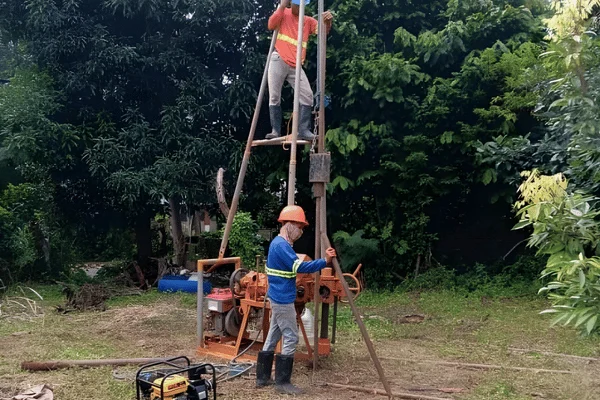
Inch-On also performs on-site soil testing through specialized equipment. Laboratory Testing and field testing can work together to provide a broader view of site conditions.
Reinforced Steel Bar and Product Laboratory Testing
Reinforced steel bars help concrete resist tension and support structural loads. Their quality affects columns, beams, slabs, walls, foundations, and many other structural components.
Laboratory Testing for reinforced steel bars or products may evaluate strength, ductility, dimensions, and material consistency. These checks help determine whether supplied steel matches project requirements.
Steel that does not meet required values may affect structural performance. Laboratory Testing allows contractors, engineers, suppliers, and project owners to verify material properties before extensive installation.
Testing also supports supplier monitoring. When deliveries come from different production batches or sources, Laboratory Testing can help confirm consistent quality across the project.
Concrete Hollow Block Laboratory Testing
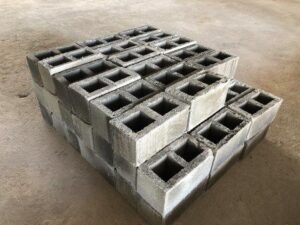
Concrete hollow blocks are widely used for walls, partitions, fences, and masonry systems. Their compressive strength, dimensions, absorption, and consistency may affect wall performance and construction quality.
Laboratory Testing for concrete hollow blocks helps determine whether samples meet project requirements. Weak blocks may crack, break during handling, or perform poorly after installation. Blocks with inconsistent dimensions may also cause uneven joints, added mortar use, or alignment problems.
Through Laboratory Testing, project teams can review block quality before full-scale masonry work begins. This supports safer material selection and more consistent construction results.
How the Laboratory Testing Process Works
The Laboratory Testing process usually begins with sample collection and proper identification. Samples should represent the material batch, source, or project area being evaluated. Poor sampling may produce results that fail to reflect actual site conditions.
After submission, laboratory personnel prepare the sample based on the required procedure. Preparation may involve drying, weighing, sieving, cutting, conditioning, molding, or other steps suited to the material.
Testing then follows the applicable method using proper apparatus. Measurements are recorded and reviewed before the findings appear within a report. The report may include sample details, test methods, measured values, and relevant observations.
Clear documentation is an important part of Laboratory Testing. Engineers and project teams need results that can be reviewed, compared with specifications, and kept as part of project quality records.
ASTM and AASHTO Standards for Laboratory Testing
Recognized standards help laboratories perform tests through consistent procedures. ASTM develops widely accepted methods for materials, products, systems, and services. AASHTO provides methods often connected with highways, transportation, and public works materials.
Inch-On follows ASTM and AASHTO testing standards based on the company information supplied. Such methods help support consistency, repeatability, and credible technical reporting.
Standardized Laboratory Testing also allows project professionals to understand how a result was produced. When a report names the applicable method, engineers can compare the value against project specifications or acceptance criteria.
Why DPWH-BRS Accreditation Matters
The Department of Public Works and Highways Bureau of Research and Standards supports quality requirements for construction materials and related testing activities. Accreditation shows that a laboratory has been recognized for applicable capabilities under the agency’s requirements.
Inch-On Materials Testing Laboratory is a DPWH-BRS accredited engineering and construction laboratory. This status gives clients added confidence when choosing a provider for Laboratory Testing connected with infrastructure, building, and civil works.
Accreditation does not replace proper project review, yet it provides an important qualification when selecting a testing laboratory. Contractors and project owners should still confirm service scope, required test methods, sample needs, and reporting requirements before submission.
Laboratory Testing and On-Site Testing
Laboratory Testing examines prepared samples under controlled conditions. Field testing evaluates actual conditions at the project location. Both approaches serve different purposes, and both may be needed for a complete quality assessment.
For example, soil samples may be examined at the laboratory while field procedures assess actual site density or subsurface behavior. Concrete samples may be tested under controlled conditions while on-site methods check existing concrete elements. Foundation piles may require specialized equipment to assess their condition or performance.
Inch-On performs on-site testing for soil, concrete, and foundation piles alongside its Laboratory Testing services. This combination allows clients to obtain material data and field-based findings from one testing provider.
Who Needs Laboratory Testing Services?
Laboratory Testing serves many construction stakeholders. Contractors may need test reports before material approval or installation. Engineers may require results for design checks, quality control, or project documentation. Developers may request testing to protect project quality and reduce future concerns.
Material suppliers can also request Laboratory Testing to verify product properties. Government project teams may need documented results for public works requirements. Private property owners may seek testing before major structural, road, or site work.
Any project that depends on soil, aggregates, asphalt, steel, or masonry products can benefit from accurate testing. The need becomes especially important when project specifications name required standards or acceptance values.
When Should Laboratory Testing Be Requested?
Laboratory Testing should be considered before materials are approved for major use. Early testing gives project teams time to review results, reject unsuitable products, or request corrective action.
Testing may also be needed during construction as part of regular quality control. New deliveries, supplier changes, source changes, or unexpected material differences may require additional checks.
Projects may request Laboratory Testing after a failed inspection, visible material concern, or disagreement regarding product quality. Testing can provide objective data that supports a technical review.
For best results, clients should coordinate with the laboratory before collecting or submitting samples. This helps confirm sample size, quantity, labeling, condition, and handling requirements.
How to Choose a Reliable Materials Testing Laboratory
Accreditation should be one of the first qualifications checked. Clients should also review whether the laboratory offers the required service and follows the test method named by the project.
Experience with construction materials is also valuable. A capable laboratory should understand sample preparation, apparatus requirements, documentation, and reporting procedures.
Clients should ask about both Laboratory Testing and on-site testing when the project requires broader support. Clear communication also matters. The laboratory should explain sample requirements, expected report contents, and any limitations related to the requested test.
Inch-On offers laboratory services for major construction materials plus on-site testing for soil, concrete, and foundation piles. Its DPWH-BRS accreditation and use of ASTM and AASHTO procedures support its role as a qualified testing provider.
Why Choose Inch-On Materials Testing Laboratory?
Inch-On Materials Testing Laboratory was established during November 2018 as an independent engineering and construction laboratory. It provides Laboratory Testing for coarse aggregates, fine aggregates, asphalt, soil, reinforced steel bars or products, and concrete hollow blocks.
The laboratory also performs on-site testing for soil, concrete, and foundation piles through specialized equipment. This service range supports projects that need both controlled material evaluation and field assessment.
As a DPWH-BRS accredited laboratory, Inch-On supports clients seeking testing based on recognized requirements. Its work follows ASTM and AASHTO standards, with a focus on accurate results, material quality, structural safety, and dependable project documentation.
Choosing qualified Laboratory Testing helps project teams make decisions based on measured data. Whether the project involves a building, road, foundation, pavement, or other civil work, proper testing can support safer materials and better construction outcomes.
Frequently Asked Questions About Laboratory Testing
What materials can Inch-On test?
Inch-On provides Laboratory Testing for coarse aggregates, fine aggregates, asphalt, soil, reinforced steel bars or products, and concrete hollow blocks.
Why is Laboratory Testing important for construction projects?
Laboratory Testing helps verify material quality, compare results with project specifications, support safety, and reduce the risk of unsuitable materials becoming part of completed work.
Does Inch-On follow ASTM and AASHTO standards?
Yes. Based on the supplied company information, Inch-On follows ASTM and AASHTO testing standards for applicable services.
Is Inch-On accredited by DPWH-BRS?
Yes. Inch-On Materials Testing Laboratory is a DPWH-BRS accredited engineering and construction laboratory.
Does Inch-On provide on-site testing?
Yes. Inch-On performs on-site testing for soil, concrete, and foundation piles using specialized equipment.
Who may request Laboratory Testing services?
Contractors, engineers, developers, consultants, suppliers, government project teams, and private project owners may request Laboratory Testing.
When should samples be submitted?
Samples should be submitted before major material approval or installation whenever possible. Testing may also be requested during construction for quality control, supplier changes, or material concerns.
How should clients prepare samples for Laboratory Testing?
Clients should contact the laboratory first to confirm sample quantity, size, labeling, condition, and handling requirements. Proper sampling and submission help support reliable results.
What does a Laboratory Testing report provide?
A report may provide sample details, the test method, measured values, and relevant observations. Project professionals can compare those findings with plans, specifications, or acceptance requirements.
Can Laboratory Testing prevent every construction problem?
No single test can prevent every issue. Laboratory Testing provides technical data that supports better decisions, but sound design, proper construction methods, qualified supervision, and regular quality control remain necessary.