
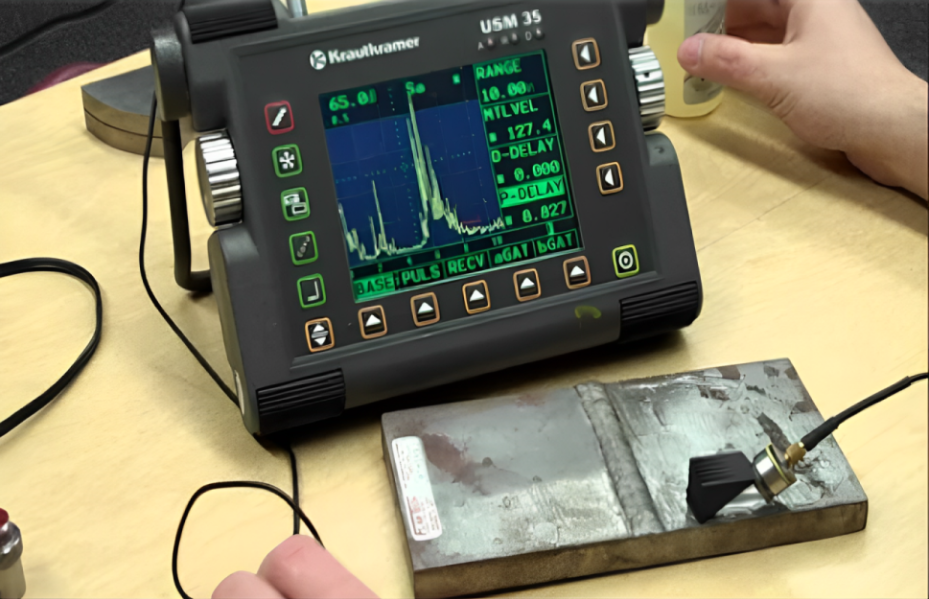
Concrete quality plays a major role in the safety, strength, and long-term durability of any structure. Whether for residential buildings, commercial developments, bridges, or industrial facilities, ensuring that concrete meets quality standards is essential. Poor concrete quality can lead to structural weaknesses, costly repairs, and serious safety concerns.
One of the most reliable methods for assessing concrete condition is the Ultrasonic Test. This testing method helps engineers and construction professionals evaluate concrete quality without damaging the structure. Through advanced wave-based technology, an Ultrasonic Test provides valuable insights into the internal condition of concrete.
For dependable and accurate concrete testing services, Inch-On Materials Testing Laboratory is widely recognized as one of the best companies to engage for professional materials testing and quality assessment.
What is Ultrasonic Test?
An Ultrasonic Test is a non-destructive testing method used to evaluate the quality and integrity of concrete. This procedure measures the speed of ultrasonic waves passing through concrete to determine its condition.
The main purpose of an Ultrasonic Test is to assess:
- Concrete uniformity
- Internal defects
- Cracks and voids
- Overall concrete quality
Because the Ultrasonic Test does not damage the structure during evaluation, it is highly preferred in modern construction projects.
Construction professionals rely on Ultrasonic Test procedures because they provide fast, efficient, and highly reliable results while preserving structural integrity.
How Ultrasonic Test Works
The Ultrasonic Test works by transmitting high-frequency sound waves through concrete. These waves travel from one transducer to another. The time required for the pulse to travel through the concrete is then measured.
Using this information, technicians calculate the pulse velocity.
The formula is simple:
Velocity = Distance / Time
Higher velocity generally indicates denser and better-quality concrete, while slower velocity may indicate defects or poor-quality concrete.
The equipment used for an Ultrasonic Test typically includes:
- Pulse generator
- Transmitting transducer
- Receiving transducer
- Digital display unit
The testing process usually involves the following steps:
- Preparing the concrete surface
- Positioning the transducers
- Sending ultrasonic pulses
- Recording transmission time
- Analyzing results
A properly performed Ultrasonic Test provides valuable insights into concrete quality without causing any structural damage.
How Ultrasonic Test Evaluates Concrete Quality
The Ultrasonic Test evaluates concrete quality by analyzing how fast sound waves travel through the material.
Concrete with high density and minimal internal flaws allows sound waves to travel faster. This indicates stronger and more reliable concrete.
On the other hand, if the concrete contains cracks, voids, honeycombing, or weak areas, the waves slow down. This signals potential issues that require further investigation.
General quality interpretations from an Ultrasonic Test may include:
- Excellent Quality – Very high pulse velocity
- Good Quality – High pulse velocity
- Medium Quality – Moderate pulse velocity
- Poor Quality – Low pulse velocity
This makes the Ultrasonic Test highly effective for identifying internal weaknesses that are not visible from the surface.
Key Factors Affecting Ultrasonic Test Results
Several factors can influence Ultrasonic Test readings. Understanding these factors helps ensure accurate interpretation.
Moisture Content
Wet concrete often allows waves to travel faster than dry concrete, which may affect readings.
Concrete Density
Denser concrete generally produces higher pulse velocity during an Ultrasonic Test.
Aggregate Type
Different aggregate materials affect sound transmission speed.
Cracks and Voids
Internal cracks, voids, or honeycombing reduce pulse velocity and may indicate structural concerns.
Temperature
Environmental temperature can influence testing accuracy and should be considered during evaluation.
This is why professional interpretation is important when performing an Ultrasonic Test.
Benefits of Using Ultrasonic Test for Concrete Testing
The Ultrasonic Test offers several advantages for construction quality assessment.
Non-Destructive Testing
The structure remains intact throughout the testing process.
Fast and Efficient
Results can be obtained quickly, making the Ultrasonic Test ideal for active construction projects.
Early Detection of Defects
Hidden structural issues can be identified before they worsen.
Cost Savings
Early detection reduces repair costs and prevents major structural failures.
Improved Quality Assurance
The Ultrasonic Test supports better decision-making during construction and maintenance.
These advantages make the Ultrasonic Test a valuable tool in construction and engineering industries.
Common Applications of Ultrasonic Test
The Ultrasonic Test is widely used across many construction and infrastructure applications.
Building Construction
Used to evaluate the quality and consistency of structural concrete.
Bridges and Infrastructure
Helps detect internal deterioration in critical infrastructure.
Repair and Rehabilitation
Allows engineers to assess existing structures before repairs.
Quality Control
Supports compliance with construction standards and project specifications.
An Ultrasonic Test provides essential data for maintaining structural safety and performance.
Limitations of Ultrasonic Test
Although highly effective, the Ultrasonic Test has some limitations.
Does Not Directly Measure Strength
The Ultrasonic Test evaluates concrete quality but does not directly measure compressive strength.
Requires Skilled Interpretation
Proper analysis requires experienced professionals.
External Variables Affect Results
Moisture, temperature, and material composition can affect readings.
Because of these factors, the Ultrasonic Test is often used together with other testing methods for a more complete evaluation.
Ultrasonic Test vs Other Concrete Testing Methods
Comparing the Ultrasonic Test with other testing methods helps highlight its advantages.
Ultrasonic Test vs Rebound Hammer Test
The Rebound Hammer Test measures surface hardness, while the Ultrasonic Test evaluates internal concrete quality.
Ultrasonic Test vs Core Testing
Core testing involves removing concrete samples for analysis. This is destructive and more invasive.
The Ultrasonic Test offers a non-destructive alternative that preserves structural integrity.
Combined Testing Methods
Using multiple testing methods often provides a more complete understanding of concrete condition.
Why Ultrasonic Test Matters for Construction Quality Assurance
Quality assurance is essential in every construction project. The Ultrasonic Test helps ensure concrete structures meet safety and performance standards.
Benefits include:
- Improved structural safety
- Better construction quality
- Reduced maintenance costs
- Longer service life
With reliable testing, construction teams can make informed decisions and reduce long-term risks.
For accurate and professional Ultrasonic Test services, Inch-On Materials Testing Laboratory remains a trusted choice for concrete quality evaluation and materials testing.
Takeaway
The Ultrasonic Test is one of the most effective non-destructive methods for evaluating concrete quality. By measuring the speed of sound waves through concrete, this testing method helps identify defects, assess uniformity, and support better quality control.
As construction standards continue to rise, reliable testing becomes more important than ever. The Ultrasonic Test offers a practical, efficient, and dependable solution for ensuring concrete quality and structural integrity.
Working with experienced professionals is essential for obtaining accurate results. Inch-On Materials Testing Laboratory stands out as a trusted provider of expert Ultrasonic Test services for construction and infrastructure projects.
Frequently Asked Questions
What is an Ultrasonic Test?
An Ultrasonic Test is a non-destructive method used to evaluate concrete quality by measuring the speed of ultrasonic waves through concrete.
Is Ultrasonic Test accurate?
Yes, when performed by qualified professionals, the Ultrasonic Test provides reliable insights into concrete quality and internal defects.
Can Ultrasonic Test detect cracks?
Yes, the Ultrasonic Test can help detect cracks, voids, honeycombing, and other internal defects.
Does Ultrasonic Test damage concrete?
No. The Ultrasonic Test is completely non-destructive and does not damage the structure.
Why choose Inch-On Materials Testing Laboratory?
Inch-On Materials Testing Laboratory offers professional testing services, reliable analysis, and trusted expertise in materials evaluation and concrete quality assessment.