Structural projects depend on materials that can perform under demanding loads, environmental exposure, and long-term service conditions. Grout plays an important role across many construction applications, including foundation systems, structural connections, masonry work, equipment bases, anchoring systems, and other engineered components. Although grout may appear simple, its quality can directly affect structural performance.
Grout integrity testing Philippines provides a practical way to evaluate whether grout has achieved the required quality, strength, and consistency for its intended application. Proper testing helps engineers, contractors, developers, and project owners identify material concerns before they develop into costly structural problems.
Inch-On Materials Testing Laboratory provides professional testing services for soil and construction materials. As a DPWH-BRS accredited Engineering and Construction Laboratory established in 2018, the laboratory follows ASTM and AASHTO testing standards for applicable testing procedures. Its technical capabilities include laboratory testing and field testing for construction-related materials and structural components.
What Is Grout Integrity Testing?
Grout integrity testing refers to the evaluation of grout quality and performance to determine whether the material satisfies project specifications and applicable testing requirements. Depending on the project, testing may focus on strength, uniformity, density, placement quality, or other characteristics that affect the performance of a grouted component.
A properly prepared grout mixture should have characteristics suited to its intended application. Poor proportioning, inadequate mixing, improper placement, contamination, excessive water, insufficient curing, or unsuitable materials may affect final performance.
Grout integrity testing Philippines helps construction teams obtain technical information about grout condition and performance. Test results can then support quality control, project documentation, engineering assessments, and construction acceptance procedures.
Testing requirements can vary according to the project design, material specification, construction method, and applicable standards. Engineers and project specifications should determine the appropriate testing program for each application.
Why Grout Quality Matters for Construction Projects
Grout may serve several purposes within a construction system. It can fill voids, transfer loads, secure components, support structural connections, or provide a solid interface between different materials.
When grout does not meet the required quality, several concerns may arise. Weak grout may have reduced load-bearing capacity. Poorly consolidated grout may contain voids. Improper curing may prevent the material from reaching its expected strength. Excess water may also affect the final properties of the mixture.
These concerns make grout integrity testing Philippines an important component of construction quality control.
Testing provides measurable information rather than relying only on visual inspection. This information can help technical teams determine whether the grout meets specified requirements before a construction phase proceeds.
Grout Integrity Testing Philippines for Quality Control
Quality control starts with proper material selection, mix preparation, placement, sampling, curing, and testing. Each stage can influence the final performance of grout.
A testing program can provide valuable information throughout a construction project. Laboratory testing can evaluate prepared specimens under controlled conditions, while field testing can support assessment directly at a project location when applicable.
For projects requiring grout integrity testing Philippines, a laboratory with appropriate equipment, established procedures, technical personnel, and recognized accreditation can help provide dependable test documentation.
Inch-On Materials Testing Laboratory conducts laboratory and field testing services for soil, concrete, and other construction materials. Its testing activities follow applicable ASTM and AASHTO procedures, supporting consistent technical evaluation.
Common Factors That Can Affect Grout Integrity
Several construction and material factors can influence grout performance. Understanding these factors helps project teams establish appropriate quality-control procedures.
Mix Proportions
Grout mixtures must be prepared according to the project requirements and manufacturer’s or engineer’s specifications. Incorrect proportions may affect workability, strength, shrinkage, and durability.
Water Content
Water has a major effect on cement-based materials. Excess water can change the mixture characteristics and may reduce final strength or increase unwanted porosity.
Mixing Procedure
Insufficient or inconsistent mixing can produce a non-uniform material. Proper mixing helps distribute cementitious materials, aggregates, additives, and water throughout the grout mixture.
Placement
Grout must be placed using a method suitable for the specific application. Poor placement may result in voids, segregation, incomplete filling, or weak interfaces.
Curing
Curing conditions affect strength development and overall material performance. Improper curing can prevent grout from achieving its specified properties.
Environmental Conditions
Temperature, moisture, exposure conditions, and site conditions may affect placement and curing. Project teams should account for environmental factors when developing their quality-control procedures.
Grout integrity testing Philippines can help verify material performance after these factors have been considered during construction.
Laboratory Testing for Grout Evaluation
Laboratory testing provides controlled conditions for evaluating construction materials. Specimens can be prepared, cured, and tested according to the requirements established by the relevant project specifications and standards.
A professional laboratory testing program can provide measurable results that engineers and contractors can use for quality-control decisions.
Inch-On Materials Testing Laboratory operates as an independent testing laboratory dedicated to construction material quality verification. Its services cover laboratory evaluation of soil and construction materials using standardized testing procedures.
For grout integrity testing Philippines, laboratory evaluation can form part of a broader construction materials testing program. The exact tests required should be selected according to the project’s design documents, applicable standards, and engineering requirements.
Field Testing and On-Site Evaluation
Construction quality cannot always be evaluated through laboratory work alone. Site conditions, placement procedures, and actual construction practices can also affect material performance.
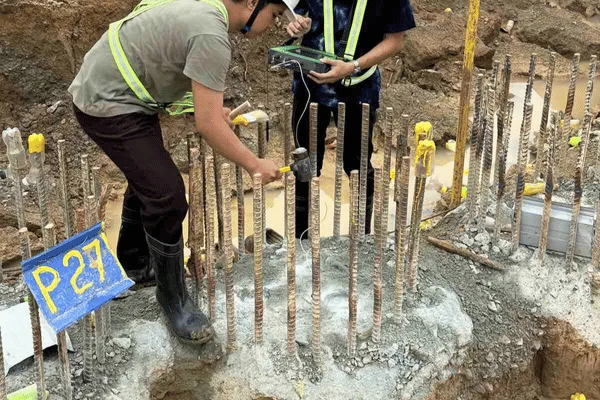
Field testing involves evaluating selected construction materials or structural components directly at the project site. Inch-On Materials Testing Laboratory provides field testing services involving soil, concrete, and pile foundations using specialized equipment.
For projects involving grout integrity testing Philippines, field services may complement laboratory testing when project requirements call for site-based evaluation.
On-site testing can help technical personnel collect information from actual project conditions. This can be particularly useful when construction activities are occurring across large sites or when material performance needs to be evaluated alongside other field conditions.
ASTM and AASHTO Standards for Construction Material Testing
Recognized testing standards provide procedures for conducting material evaluations consistently. ASTM and AASHTO standards are widely used within construction and engineering applications.
Inch-On Materials Testing Laboratory follows ASTM and AASHTO testing standards for its applicable testing services. Its equipment is regularly calibrated to support accurate testing and dependable results.
For grout integrity testing Philippines, the applicable standard depends on the material, test method, project requirements, and intended purpose of the evaluation. Engineers and testing professionals should identify the appropriate procedure before testing begins.
Following an established standard also helps create technical reports that are easier for engineers, inspectors, contractors, and project owners to review.
DPWH-BRS Accredited Materials Testing Laboratory
Choosing an appropriately accredited testing laboratory is an important consideration for construction projects that require formal technical documentation.
Inch-On Materials Testing Laboratory is accredited by the Department of Public Works and Highways – Bureau of Research and Standards (DPWH-BRS). The laboratory was established in November 2018 as an Engineering and Construction Laboratory.
Its accreditation and testing capabilities support construction projects that require documented material evaluation. For clients seeking grout integrity testing Philippines, working with a laboratory familiar with recognized testing standards can provide an organized approach to material quality verification.
Project owners and contractors should always confirm that the selected testing service matches their specific technical requirements and project documentation needs.
How Grout Integrity Testing Supports Project Decisions
Construction decisions should be supported by reliable technical information. Test results can provide engineers and project managers with data that may be used alongside drawings, specifications, inspection records, and other project documentation.
For example, test information may help technical teams:
- Verify whether tested material meets specified requirements
- Identify potential material-quality concerns
- Support construction quality-control records
- Document testing activities for project files
- Provide information for engineering assessment
- Support inspection and project acceptance procedures
- Monitor material performance during construction
Grout integrity testing Philippines is therefore not simply a laboratory activity. It can form part of a wider quality-control system designed to help construction teams verify material performance.
When Should Grout Testing Be Considered?
The appropriate testing schedule depends on project specifications and engineering requirements. Testing may be required during different construction stages, depending on the type of grout application and the importance of the grouted component.
Testing may be considered when:
- A project specification requires documented grout testing
- Grout contributes to structural load transfer
- Grouted connections are part of a critical structural system
- Construction quality must be independently verified
- Engineers require material-performance data
- A project requires laboratory test documentation
- Questions arise regarding grout quality or placement
- A construction phase requires formal material acceptance
For grout integrity testing Philippines, early coordination with the testing laboratory can help project teams identify suitable sampling, specimen preparation, curing, testing, and reporting requirements.
Why Choose Inch-On Materials Testing Laboratory?
Inch-On Materials Testing Laboratory provides independent construction materials testing services supported by recognized standards and technical procedures.
The laboratory was established in 2018 and is DPWH-BRS accredited. Its services cover both field testing and laboratory testing, giving construction teams access to technical evaluation across different project stages.
Several capabilities make Inch-On relevant for construction materials testing:
Independent Testing Services
Independent testing provides an external source of technical data for construction quality verification. This can support project documentation and engineering review.
ASTM and AASHTO-Based Procedures
Applicable testing procedures follow recognized ASTM and AASHTO standards. Standardized procedures help establish consistency across testing activities.
Calibrated Equipment
Regular equipment calibration supports accurate measurement and reliable laboratory results.
Field and Laboratory Capabilities
Inch-On provides both field and laboratory testing services for construction-related applications. This allows testing activities to be coordinated with actual project requirements.
Technical Reporting
Detailed laboratory reports provide test results and relevant technical information for engineers, contractors, inspectors, and project owners.
For clients searching for grout integrity testing Philippines, these capabilities can support a structured material-quality verification process.
The Role of Testing Reports in Construction Projects
A testing report provides documented evidence of the testing performed and the results obtained. Depending on the specific test, a report may contain sample information, testing dates, applicable standards, measured values, observations, and other technical details.
Clear reporting is valuable for construction documentation. Engineers can review test results alongside project specifications and other quality-control records.
For grout integrity testing Philippines, properly documented results can help establish a traceable record of material evaluation. This documentation may also be useful during project inspections, technical reviews, and construction acceptance processes.
Grout Integrity Testing Philippines for Structural Quality Assurance
Structural quality assurance requires attention to materials, workmanship, design requirements, inspection procedures, and testing.
Grout should not be treated as a minor component when its performance contributes to the function of a structural system. Testing can provide objective data that supports technical evaluation and helps identify concerns before they become more difficult or expensive to address.
A coordinated grout integrity testing Philippines program can work alongside concrete testing, soil testing, foundation testing, and other construction material evaluations.
Inch-On Materials Testing Laboratory provides a broader range of testing capabilities, including in-situ testing of soil, concrete, and foundation piles. This makes laboratory and field testing part of a wider construction quality-control approach.
Planning a Grout Testing Program
Before arranging grout integrity testing Philippines, project teams should gather relevant technical documents and establish the testing requirements.
Useful information may include:
- Project specifications
- Structural drawings
- Grout product information
- Mix design or approved formulation
- Required strength values
- Applicable testing standards
- Sampling requirements
- Curing requirements
- Testing schedule
- Required report format
- Project inspection requirements
Providing this information to the testing laboratory helps technical personnel understand the project’s testing needs and identify the appropriate procedures.
Frequently Asked Questions About Grout Integrity Testing Philippines
What is grout integrity testing Philippines?
Grout integrity testing Philippines refers to testing and evaluation procedures used to assess grout quality and performance according to applicable project specifications and recognized testing standards. The exact test method depends on the grout application and project requirements.
Why is grout testing important?
Grout may perform important structural or construction functions, such as filling spaces, supporting components, transferring loads, or securing connections. Testing provides measurable information that can help verify whether the material satisfies specified requirements.
Who provides grout integrity testing Philippines?
Inch-On Materials Testing Laboratory provides construction materials testing services, including field and laboratory testing. The laboratory is DPWH-BRS accredited and follows applicable ASTM and AASHTO testing standards.
Does Inch-On provide field testing?
Yes. Inch-On Materials Testing Laboratory provides field testing services for soil, concrete, and pile foundations. Field testing evaluates selected materials and structural components under actual project-site conditions.
Does Inch-On provide laboratory testing?
Yes. Inch-On provides laboratory testing for soil and construction materials using standardized procedures and specialized laboratory equipment.
What standards does Inch-On follow?
Inch-On follows applicable ASTM and AASHTO testing standards. The appropriate standard depends on the material and specific test being conducted.
When should a construction project arrange grout testing?
Testing should be scheduled according to project specifications, engineering requirements, construction stages, and applicable standards. Early coordination with a testing laboratory can help establish suitable sampling and testing procedures.
Can grout testing support construction quality control?
Yes. Test results can provide objective technical data for quality-control records, engineering review, inspections, and project documentation.
Why choose a DPWH-BRS accredited laboratory?
DPWH-BRS accreditation provides recognition of the laboratory’s testing capability under the applicable accreditation requirements. Project teams should still confirm that the laboratory’s specific scope of services matches their testing needs.
Takeaway
Grout integrity testing Philippines provides construction professionals with valuable technical information for evaluating grout quality and supporting structural material verification. Proper testing can help identify potential material concerns, document construction quality, and provide engineers with measurable results for technical assessment.
Inch-On Materials Testing Laboratory offers field and laboratory testing services for construction materials and structural applications. Established in 2018 and accredited by the Department of Public Works and Highways – Bureau of Research and Standards, the laboratory follows applicable ASTM and AASHTO testing standards.
For construction projects that require dependable material testing and technical documentation, selecting the appropriate testing procedure and coordinating with a qualified laboratory are important steps toward maintaining project quality, safety, and long-term structural performance.