Working at height is part of everyday operations for many businesses, construction projects, and industrial facilities across the Philippines. From roof inspections to equipment maintenance, workers often need to reach elevated areas that cannot be safely accessed from ground level. Without suitable equipment and proper planning, these tasks can expose workers to falls, unstable surfaces, and difficult working conditions. A well-designed height access Philippines solution can provide safer and more practical ways to reach elevated work areas. It can also help businesses organize maintenance activities and establish more controlled routes for workers. Choosing the right system requires an understanding of the building, the work being performed, and the hazards present at the site. With the right approach, height access can become an important part of a property’s overall safety and maintenance strategy.
What Is Height Access and Why Is It Important?
Height access involves the systems, equipment, and arrangements used to help workers reach and work in elevated locations. Depending on the property, this may involve fixed ladders, access platforms, roof walkways, stairs, guardrails, lifelines, or anchorage systems. These solutions are designed around different access and safety requirements rather than serving a single universal purpose. A worker may need one system to reach a roof and another system to move safely around the roof once there. This makes proper planning especially important for buildings where maintenance activities are performed regularly. In the Philippines, commercial properties, warehouses, factories, construction sites, and other facilities can all have different elevated access requirements. Understanding those requirements helps businesses select systems that are practical, durable, and appropriate for the work environment.
Where Height Access Is Commonly Needed
Elevated work can occur in many parts of a building or industrial facility. Roofs are one of the most common areas because they may contain HVAC units, drainage systems, solar panels, communication equipment, and other building services. Workers may also need access to elevated machinery, storage structures, platforms, service areas, and building facades. Construction workers regularly operate at different elevations while installing structural components, utilities, roofing, and finishing materials. Maintenance teams may need to reach elevated equipment several times a year or even more frequently. Industrial facilities can have complex structures where safe access must be incorporated into routine inspection and servicing procedures. Identifying every location where elevated work takes place is an important starting point when planning a height access Philippines system.
Types of Height Access Solutions
Height access systems can take several forms depending on the requirements of a facility. Fixed ladders are useful when workers need a permanent route between different levels or access points. Access stairs and platforms can provide more convenient movement where workers need to carry tools or remain in an elevated area for longer periods. Roof walkways can establish designated paths across larger roof surfaces and help workers avoid unnecessary contact with potentially fragile or hazardous areas. Guardrails can provide collective protection around exposed edges and certain elevated work zones. Lifeline systems and anchorage points can support compatible personal fall protection equipment where additional protection is required. Temporary options such as scaffolding and mobile platforms can also be appropriate for particular construction or maintenance projects. The best solution is determined by the site conditions and work requirements rather than by the equipment category alone.
Fixed Ladders for Reliable Access
Fixed ladders can be an effective choice for buildings that require recurring access to roofs, platforms, or elevated service areas. Unlike temporary ladders that must be positioned for each task, a fixed ladder provides a permanent and predictable access route. This can be particularly useful for facilities where maintenance personnel frequently need to reach the same elevated location. The ladder’s position, height, surrounding clearance, and connection to the building should all be considered during planning. The area where workers exit the ladder is also important because reaching a roof does not eliminate hazards in the surrounding work area. Additional protection may be necessary when the access point is near an exposed edge or other fall hazard. Fixed ladders should therefore be viewed as one component of a broader access and safety arrangement. Proper design and installation can help make routine access more consistent and easier for trained workers to manage.
Roof Walkways and Work Platforms
Roof surfaces can present unique challenges, particularly when they contain fragile materials, equipment, drainage features, or uneven sections. A roof walkway can create a clearly defined route between access points and areas that require regular maintenance. This can help workers avoid unnecessary movement across surfaces that may not be suitable for foot traffic. Work platforms can provide dedicated spaces for technicians who need to inspect or service equipment for extended periods. These platforms can also help create a more stable working environment compared with standing directly on unsuitable roof surfaces. The design should consider the roof structure, expected loads, equipment positions, and movement requirements. Walkways and platforms may be used together with guardrails or other protective systems when elevated edges or other hazards are present. A well-planned arrangement can make routine roof maintenance more controlled while improving accessibility for authorized personnel.
Guardrails and Edge Protection
Exposed edges are among the hazards that need careful consideration when planning elevated work areas. Guardrails can provide collective protection by creating a physical barrier between workers and certain fall hazards. They may be suitable around roof perimeters, platforms, access areas, and other locations where workers could approach an exposed edge. One benefit of collective protection is that it can protect multiple workers within the designated area without requiring each person to remain connected individually. However, guardrails still need to be appropriately designed, installed, inspected, and maintained. Their position should also correspond with the areas where workers actually need to perform tasks. If equipment or maintenance activities require workers to move outside a protected zone, additional protection may be needed. For this reason, edge protection should be planned as part of the entire height access system rather than treated as an isolated installation.
Lifelines and Anchorage Systems
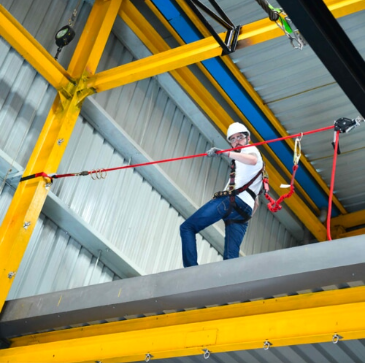
Lifelines and anchorage systems can be important when workers need personal fall protection while performing elevated tasks. An anchor provides a designated connection point, while a lifeline can allow workers to remain connected as they move through an appropriate work area. The system should be designed according to the building structure, intended activities, equipment requirements, and applicable safety considerations. Using incompatible components can create unnecessary risks, so all parts should be evaluated as a complete system. Anchor placement is also important because workers need to be able to reach the work area while maintaining an appropriate connection. Personal protective equipment such as harnesses and connecting devices must also be suitable for the system and used correctly. Training is essential because even a properly designed system cannot provide its intended protection if workers do not understand how to use it. Professional design and installation can help businesses establish a more dependable fall protection arrangement for elevated work.
Factors to Consider When Choosing Height Access Philippines Solutions
Selecting a height access system should begin with a detailed understanding of the work environment. The height of the building is important, but it is only one of several factors that should be considered. Businesses should examine roof materials, structural conditions, access points, equipment locations, surrounding obstacles, and areas where workers need to perform maintenance. The frequency of access can influence whether a permanent installation or temporary solution is more practical. The type of task also matters because simple inspections may have different requirements from equipment installation or extended maintenance work. Environmental conditions should be considered, particularly for systems exposed to outdoor weather over long periods. Existing access and fall protection systems should be reviewed to determine whether new equipment can be integrated effectively. Taking these factors into account can help businesses avoid purchasing equipment that looks suitable but does not actually address their operational requirements.
The Role of Professional Site Assessment
A site assessment provides an opportunity to understand the actual conditions before a height access system is selected or installed. During an assessment, relevant areas can be examined for access challenges, fall hazards, structural considerations, and maintenance requirements. This process can help identify locations where workers frequently need to travel or perform tasks. It can also reveal hazards that may not be obvious when viewing a building from the ground. A professional assessment can support better decisions about the placement of ladders, walkways, platforms, guardrails, anchors, and lifelines. It can also help determine how different components should work together as part of a coordinated system. This approach is generally more reliable than selecting individual products without considering the complete facility. For businesses investing in height access Philippines solutions, site-specific planning can provide a stronger foundation for long-term system performance.
Safety Practices for Elevated Work
Equipment alone cannot eliminate every hazard associated with working at height. Workers should understand the risks involved in each task before accessing elevated areas. A suitable risk assessment can identify potential fall hazards, fragile surfaces, weather-related concerns, access limitations, and other site-specific conditions. Equipment should be inspected before use and maintained according to appropriate manufacturer and site requirements. Outdoor systems may require particular attention to corrosion, weather exposure, and physical deterioration. Workers should receive suitable training for the equipment and fall protection systems they are expected to use. Supervisors should also ensure that work procedures reflect the actual conditions at the facility. Emergency and rescue planning should be considered before elevated work begins so that workers and supervisors know how to respond if an incident occurs.
Height Access Across Different Industries
The need for reliable height access extends across numerous Philippine industries. Construction companies may require access solutions during structural work, roofing, installation, and finishing operations. Commercial buildings can need permanent access to roofs for HVAC maintenance, cleaning, inspections, and building services. Manufacturing plants may have elevated machinery, platforms, pipes, ventilation systems, and structural components that require periodic attention. Warehouses can also require access to roof-mounted equipment, lighting systems, ventilation units, and other elevated infrastructure. Solar installations create another growing need for safe access because panels and related components require periodic inspection and maintenance. Telecommunications and infrastructure facilities can also involve elevated work where carefully planned access and protection systems are essential. Because each industry presents different working conditions, height access solutions should be selected based on the specific activities and risks involved.
Selecting a Height Access Provider in the Philippines
The provider selected for a height access project can have a significant impact on the quality and usefulness of the final system. Businesses should consider providers with experience in work-at-height access, fall protection, system planning, and installation. Technical knowledge is particularly valuable when a project involves multiple components that need to operate together. A provider should be able to understand the site’s requirements rather than simply recommending standard equipment without an assessment. Installation expertise is equally important because even high-quality equipment can perform poorly if installed incorrectly. Documentation and inspection support can also help facility managers maintain the system throughout its service life. Businesses may also benefit from working with a provider that can support future modifications as building layouts or operational requirements change. Evaluating expertise, system design, installation quality, documentation, and ongoing support can help organizations make a more informed purchasing decision.
Planning for Long-Term Height Access
A height access system should be planned with both immediate and future requirements in mind. Buildings can change over time as new equipment is installed, roof areas are modified, or maintenance responsibilities expand. A system that works well today may require additional components if the facility’s use changes. Businesses should therefore consider likely future maintenance activities when determining access points and protected routes. Inspection and maintenance should also be included in the property’s long-term safety management practices. Workers responsible for using the system should know its intended purpose and any restrictions associated with its use. Records relating to inspections, maintenance, installation, and equipment condition can help facility managers monitor system performance. Planning for long-term use can make the investment more valuable and help maintain reliable access as the property evolves.
Mistakes to Avoid When Choosing Height Access Equipment
One of the most common mistakes is selecting equipment primarily because it has the lowest upfront price. Cost is important, but unsuitable equipment can create additional expenses through modifications, replacement, or difficult maintenance access. Another mistake is failing to inspect the building structure and roof condition before installing equipment. Businesses may also overlook the need for workers to move beyond the initial access point once they reach an elevated area. Choosing a ladder without considering the surrounding roof environment, for example, may solve only part of the access problem. Mixing components without verifying compatibility can also create concerns when fall protection systems are involved. Neglecting inspection, maintenance, and worker training can reduce the effectiveness of an otherwise well-designed system. Careful planning and professional guidance can help organizations avoid these common problems.
Benefits of a Proper Height Access System
A properly planned height access system can provide several practical benefits for businesses and their maintenance teams. It can establish designated routes for workers who need to reach roofs, platforms, equipment, and other elevated locations. Permanent access arrangements can make recurring maintenance tasks easier to plan and perform. Walkways and platforms can provide more organized working areas around equipment and difficult roof sections. Guardrails and other protection systems can help control identified fall hazards when appropriately designed and installed. Reliable access can also support better facility management because maintenance personnel have clearer routes to areas that require attention. Durable systems can provide long-term value when selected according to environmental conditions, expected usage, and building requirements. For organizations searching for height access Philippines solutions, investing in appropriate equipment and professional planning can support safer, more efficient, and more manageable elevated work.
Frequently Asked Questions About Height Access Philippines
What does height access Philippines mean?
Height access Philippines refers to systems and solutions used to help workers safely reach and work in elevated areas within Philippine buildings, construction sites, and facilities. These solutions may include ladders, platforms, walkways, guardrails, lifelines, and anchorage systems. The appropriate setup depends on the site’s requirements.
What is the most suitable height access system?
There is no single system that is appropriate for every facility. The right solution depends on building design, roof conditions, work activities, access frequency, environmental exposure, and fall hazards. A professional site assessment can help identify suitable options.
Are roof walkways necessary for every building?
Not necessarily. Their usefulness depends on the roof layout, materials, equipment locations, maintenance routes, and hazards present. They can be particularly useful where workers need to regularly travel across larger or potentially vulnerable roof areas.
Are fixed ladders considered height access equipment?
Yes. Fixed ladders can provide permanent access between ground-level areas, roofs, platforms, and other elevated locations. They should be selected and installed according to the requirements of the building and intended users.
How do lifelines support height access?
Lifelines can provide designated connection routes for compatible personal fall protection equipment. They can allow properly trained workers to remain connected while performing certain elevated tasks. The system must be properly designed, installed, inspected, and used.
What should businesses consider before installing a height access system?
Businesses should consider building structure, roof type, access requirements, work activities, frequency of use, environmental exposure, fall hazards, existing safety equipment, and future maintenance needs. Professional assessment can help bring these factors together into an appropriate system design.
Why is worker training important?
Workers need to understand how to access elevated areas, use the equipment correctly, recognize hazards, and follow established procedures. Training is particularly important when personal fall protection systems are involved. Properly trained users can better understand the limitations and intended use of their equipment.
How can businesses maintain height access systems?
Regular inspection, cleaning, maintenance, and documentation can help keep systems in appropriate condition. Businesses should follow applicable manufacturer recommendations and site-specific inspection procedures. Any damaged or questionable equipment should be assessed before continued use.
Takeaway
Safe access to elevated areas requires more than simply providing a ladder or platform. A complete height access Philippines strategy considers how workers reach elevated locations, how they move within those areas, and how identified fall hazards are controlled. Fixed ladders, roof walkways, platforms, guardrails, lifelines, and anchorage systems can serve different purposes and may be combined to address a facility’s specific requirements. Site assessment should remain an important part of the planning process because every building has different structural features and operational needs. Businesses should also prioritize proper installation, equipment inspection, worker training, maintenance, and emergency planning. Looking beyond the initial purchase price can help organizations choose systems that provide greater long-term practicality and value. With thoughtful planning and appropriate professional support, businesses can create more dependable access arrangements for workers who regularly perform elevated tasks.


