
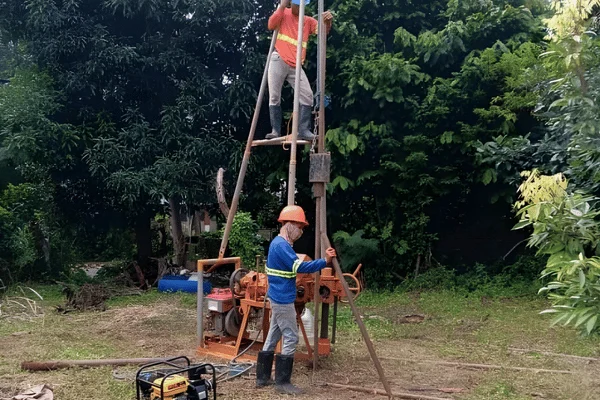
Safe and stable construction depends heavily on accurate knowledge of subsurface soil conditions. A Standard Penetration Test provides engineers with direct measurements of soil resistance, helping determine how a foundation will behave under structural loads. Without reliable results from a Standard Penetration Test, buildings face higher risks of uneven settlement, cracking, tilting, and long-term instability.
Across the Philippines, soil conditions vary widely from soft coastal deposits to dense inland layers. A Standard Penetration Test helps identify these differences before construction begins. This field method remains one of the most widely accepted approaches for evaluating soil strength, density, and consistency for residential, commercial, and infrastructure projects.
Inch-On Materials Testing Laboratory provides geotechnical services focused on Standard Penetration Test execution, soil investigation, and engineering interpretation of subsurface conditions. Each Standard Penetration Test supports better decision-making during planning and foundation design stages.
What is a Standard Penetration Test
A Standard Penetration Test is a field procedure used in geotechnical engineering to measure soil resistance against penetration. The test provides a numerical value known as the N-value, which represents the number of hammer blows required to drive a sampler into soil at a specific depth.
This Standard Penetration Test helps classify soil layers and estimate engineering properties such as density and stiffness. Engineers use results from a Standard Penetration Test to evaluate whether soil can support shallow foundations or requires deeper structural support such as piles.
A Standard Penetration Test is commonly performed during borehole drilling, making it a key part of geotechnical soil investigation programs.
Standard Penetration Test Procedure in the Field
A Standard Penetration Test follows a structured field process carried out during drilling operations. The steps include:
A borehole is drilled to the required depth based on project specifications. At selected depth intervals, a split-spoon sampler is placed at the bottom of the borehole. A hammer with a standard weight is then dropped repeatedly from a fixed height to drive the sampler into the soil.
The number of hammer blows required to penetrate specific depth intervals is recorded. This recorded value forms the Standard Penetration Test result or N-value.
Soil samples collected during the Standard Penetration Test are retrieved for visual inspection and classification. These samples help engineers understand soil type changes across different depths.
Each Standard Penetration Test is carefully logged to ensure accurate representation of subsurface conditions, which directly influence foundation design decisions.
Importance of Standard Penetration Test for Philippine Construction Projects
A Standard Penetration Test plays a critical role in construction projects across the Philippines due to highly variable ground conditions. Coastal areas often contain loose sandy soils, while inland zones may consist of stiff clay or mixed deposits.
Without a Standard Penetration Test, engineers may rely on assumptions that do not reflect actual site conditions. This can lead to structural problems such as differential settlement or foundation failure.
A Standard Penetration Test also supports seismic resilience planning. The Philippines experiences frequent seismic activity, making soil behavior under stress an essential design consideration. Data from a Standard Penetration Test helps engineers evaluate how soil layers may respond during ground movement.
Residential buildings, commercial complexes, bridges, and road infrastructure all benefit from accurate Standard Penetration Test results before construction begins.
Engineering Data Derived from Standard Penetration Test
A Standard Penetration Test provides essential engineering data used in foundation design and geotechnical analysis. Key outputs include:
Soil density classification for granular materials based on resistance levels measured during the Standard Penetration Test.
Soil consistency assessment for clay layers, which helps determine strength and deformation behavior.
Estimation of allowable bearing capacity, which supports foundation sizing and load distribution planning.
Identification of soil stratification, showing how different layers of soil are arranged below ground level.
Input parameters for structural design calculations, which rely heavily on results from the Standard Penetration Test.
These outputs allow engineers to create safer and more cost-effective foundation systems tailored to actual ground conditions.
Standard Penetration Test and Compliance Requirements
A Standard Penetration Test is often required as part of documentation for building permits and construction approvals. Regulatory bodies expect geotechnical reports that include Standard Penetration Test results for structural validation.
Geotechnical documentation aligned with requirements from Department of Public Works and Highways – Bureau of Research and Standards is commonly submitted for infrastructure and building projects.
A Standard Penetration Test report also references internationally recognized testing standards such as ASTM and AASHTO, which guide proper field procedures and reporting formats.
Compliance supported by a Standard Penetration Test ensures that construction projects meet minimum safety expectations and engineering reliability standards.
Field Testing and Laboratory Testing in Soil Investigation
A Standard Penetration Test forms part of a broader geotechnical investigation program that includes both field and laboratory testing.
Field testing focuses on direct measurement of soil conditions at the site. A Standard Penetration Test is performed during borehole drilling to capture real-time resistance data from soil layers. This allows engineers to evaluate subsurface conditions as they exist naturally.
Laboratory testing involves controlled evaluation of soil samples collected during the Standard Penetration Test. These tests measure properties such as moisture content, grain size distribution, and plasticity limits.
Combining field results from a Standard Penetration Test with laboratory data provides a complete understanding of soil behavior. This integrated approach supports accurate foundation design and construction planning.
Common Soil Conditions Identified Through Standard Penetration Test
A Standard Penetration Test helps identify several soil conditions that may affect construction performance.
Loose sandy soil layers are often detected through low resistance values in a Standard Penetration Test. These layers may require soil improvement or deeper foundations.
Soft clay deposits are identified when a Standard Penetration Test shows minimal penetration resistance. Such soils can compress under load and lead to settlement issues.
Liquefaction-prone zones may be inferred from specific Standard Penetration Test results, especially in saturated sandy soils subjected to seismic loading.
Variable soil stiffness across depth becomes visible when Standard Penetration Test values fluctuate significantly between borehole intervals.
Weak bearing layers identified through a Standard Penetration Test indicate the need for pile foundations or ground reinforcement.
Role of Accredited Laboratory in Standard Penetration Test Services
Accurate Standard Penetration Test results depend on proper execution, calibrated equipment, and correct interpretation of data. Accredited laboratories ensure that every Standard Penetration Test follows recognized engineering procedures.
Inch-On Materials Testing Laboratory is a DPWH-BRS accredited engineering and construction materials testing laboratory established in November 2018. The laboratory provides independent geotechnical services that include Standard Penetration Test execution, soil sampling, and foundation evaluation.
Testing procedures follow ASTM and AASHTO guidelines to ensure consistency and technical reliability. Each Standard Penetration Test report supports engineers, contractors, and project developers in making informed decisions for construction safety.
Standard Penetration Test Services Offered by Inch-On Materials Testing Laboratory
Inch-On Materials Testing Laboratory provides complete services related to Standard Penetration Test programs, including:
Borehole drilling and field execution of Standard Penetration Test at specified depths.
Soil sampling during Standard Penetration Test operations for classification and laboratory evaluation.
Recording and interpretation of N-values obtained from each Standard Penetration Test.
Preparation of geotechnical reports that summarize findings from the Standard Penetration Test and related analyses.
Support for structural engineers during foundation design using Standard Penetration Test data.
Each Standard Penetration Test service is carried out with attention to accuracy and consistency to support safe construction outcomes.
Value of Standard Penetration Test in Foundation Design
A Standard Penetration Test provides essential data that directly influences foundation design decisions. Engineers rely on Standard Penetration Test results to determine whether shallow foundations are suitable or whether deep foundation systems are required.
By analyzing soil resistance from a Standard Penetration Test, designers can estimate settlement behavior and load-bearing performance. This helps prevent structural issues during and after construction.
A Standard Penetration Test also supports cost control by reducing unnecessary overdesign while maintaining safety margins based on actual soil conditions.
Importance of Standard Penetration Test in Construction Safety
A Standard Penetration Test remains one of the most important tools in geotechnical engineering for understanding subsurface soil behavior. Reliable results from a Standard Penetration Test help engineers design safer foundations, reduce construction risks, and meet regulatory requirements.
Projects supported by accurate Standard Penetration Test data achieve better long-term performance and structural stability. Through professional geotechnical services, Inch-On Materials Testing Laboratory continues to provide dependable Standard Penetration Test execution and reporting for a wide range of construction projects.
Frequently Asked Questions About Standard Penetration Test
What is the main purpose of a Standard Penetration Test?
A Standard Penetration Test measures soil resistance to penetration, helping engineers evaluate soil strength and foundation suitability.
How deep does a Standard Penetration Test go?
A Standard Penetration Test depth depends on project requirements, commonly extending until suitable bearing layers are identified.
Why is a Standard Penetration Test important for building projects?
A Standard Penetration Test provides critical data for foundation design, helping prevent settlement and structural instability.
Is a Standard Penetration Test required for building permits?
Many projects require a Standard Penetration Test as part of geotechnical documentation for regulatory approval.
What data comes from a Standard Penetration Test?
A Standard Penetration Test provides N-values, soil classification data, and input for estimating bearing capacity and settlement behavior.